
What Makes One Street Age Better Than the Next?
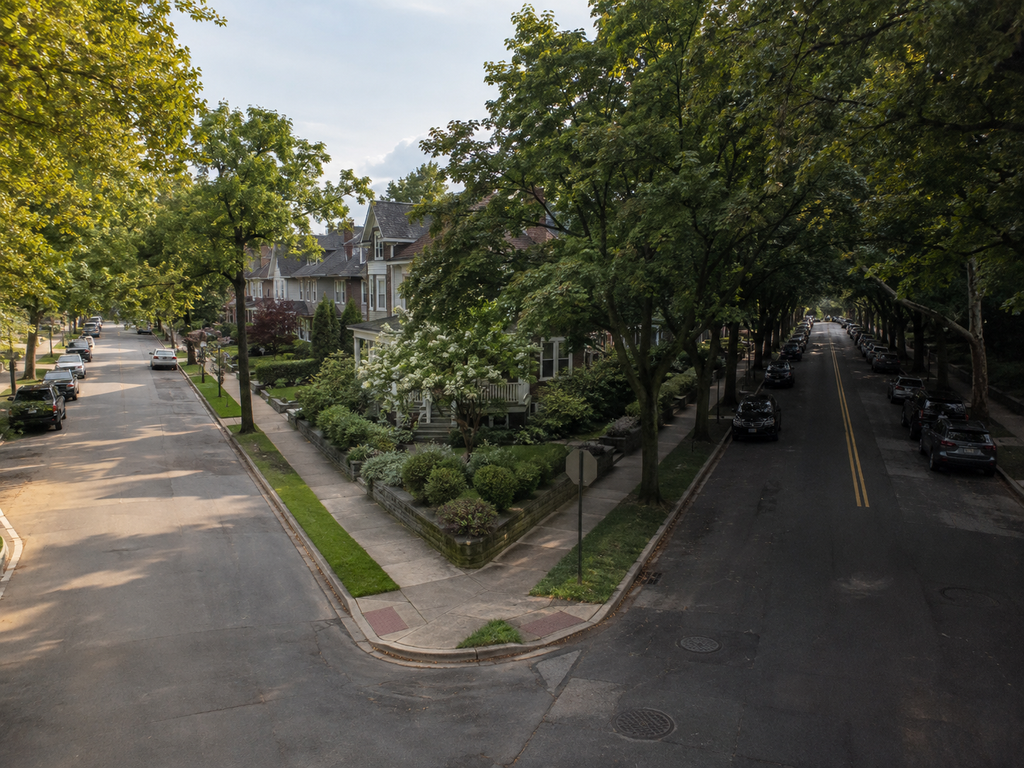
Two streets sit parallel to one another, separated by nothing more than a single block of residential structures. They were laid out by the same developers, feature nearly identical architectural proportions, and were once considered interchangeable by every buyer in the area. Yet, as time passes, the divergence becomes palpable. One street settles into a quiet, graceful maturity, while the other feels increasingly frayed and disjointed. This transformation is not the result of a single catastrophe or a singular investment, but a slow accretion of environmental factors that compound over decades.
The Cumulative Impact of Micro-Topography and Light
The way a street relates to the sun often determines how it feels in the afternoon of its existence. Small differences in street orientation and topography create micro-climates that influence human behavior. A street tilted ever so slightly toward the south, catching the late-afternoon light, will naturally retain more greenery in front gardens. Over decades, this leads to denser canopy covers and more robust vegetation. These natural features act as buffers against the city, softening the edges of buildings that might otherwise show their age more harshly.
Conversely, a street trapped in a permanent shadow corridor, created by building heights or a slight depression in the land, struggles to sustain the same level of aesthetic upkeep. Property owners find it harder to maintain lawns or landscaping, and the physical surfaces of the houses themselves often suffer from slower evaporation of moisture. These subtle environmental conditions influence what a property is really worth by dictating the perceived vitality of the environment. When the sunlight hits the pavement consistently, the street feels cleaner, brighter, and more inviting, a condition that encourages residents to invest their time and resources into exterior improvements. A street that lacks this natural warmth eventually becomes a backdrop for neglect, where the lack of light discourages the very interventions that might have kept it fresh.
The Friction of Circulation and Through-Traffic
Traffic patterns act as a slow-acting acid on the character of a residential street. Even in neighborhoods where the streets are physically similar, the subtle geometry of the surrounding grid dictates how people drive through them. One street may inadvertently function as a shortcut, funneling non-resident traffic through the block. At first, the impact is negligible—a car every few minutes. But over two decades, this constant pulse of transient energy wears down the sense of place. The noise levels dictate the usability of front porches and windows, effectively pushing resident activity into the back of the house or inside.
On the adjacent street, a single one-way restriction or a slightly wider curb radius at the entrance keeps traffic to a local minimum. Here, the street remains a space for interaction rather than a transit corridor. The difference is profound when measured over long horizons. On the quieter street, children play, neighbors linger, and the pavement is treated as a shared living room. These behavioral shifts translate into a maintenance cycle where residents take greater pride in the streetscape. The street that manages to protect itself from the intrusion of the city grid remains an asset that appreciates in social and economic viability, while the thoroughfare inevitably retreats into a purely utilitarian function.
The Role of Edge Conditions and Public Infrastructure
The presence of public institutions like schools or public transit nodes introduces a specific type of rhythmic intensity to a street. A bus stop located at the corner of one street introduces a high volume of foot traffic and transitory human presence. While this provides accessibility, it also brings a constant turnover of litter and the inherent wear and tear of a transit interface. When this is coupled with a school zone, the street undergoes dramatic cycles of intense noise and frantic activity followed by sudden, eerie silences.
Some streets manage these edge conditions gracefully by incorporating wide planting strips or deep setbacks, while others feel suffocated by them. A street that allows for a buffer between the public infrastructure and the front door sustains its residential character more effectively. Over time, those who choose to live on the busier corner often find their investment tied to the fluctuating quality of the public stop itself, whereas the street a few doors away, shielded by the geometry of the blocks, maintains a consistent residential atmosphere. The predictability of the street environment is a primary driver of long-term value; the more unpredictable the external pressures on a street, the more difficult it is to maintain a cohesive residential standard.
Dynamism and the Evolution of Urban Character
It is a mistake to view a street as a static entity. The attractiveness of a location is a dynamic variable that shifts as the city around it evolves. A street that was once ignored due to its distance from a commercial hub may suddenly find itself in the middle of a desirable zone as transit lines expand or local amenities cluster within walking distance. This type of positive change can revitalize a street that had previously stagnated. Conversely, a street that relied on a specific view or a sense of isolation can lose its appeal as development creeps in and compromises those assets.
These shifts often occur at a scale that is difficult to quantify during an initial observation. It requires looking at how the street connects to the larger fabric. Is the pedestrian path continuous? Does the topography allow for natural drainage? Are there corner properties, that offer natural light and ventilation advantages that other units lack? The most resilient streets are those that maintain a balance between accessibility and enclosure. They provide enough movement to feel connected to the city, but enough physical insulation to allow for the quietude required for domestic life. When these factors align through the luck of planning or the design of the original grid, the street becomes more than a collection of houses; it becomes an environment that actively resists the erosion of time, remaining as desirable to the next generation as it was to the last.